
The Journey of a Part: Understanding Investment Casting Services in Under 5 Minutes
Welcome to IPC's casting basics series, where we tackle FAQs, parts of the casting process, and other common aspects of our industry, all in 5 minutes or less.
In this article, we're going to examine the journey of a part from start to finish to help you feel more familiar with investment casting. Let's get into it!
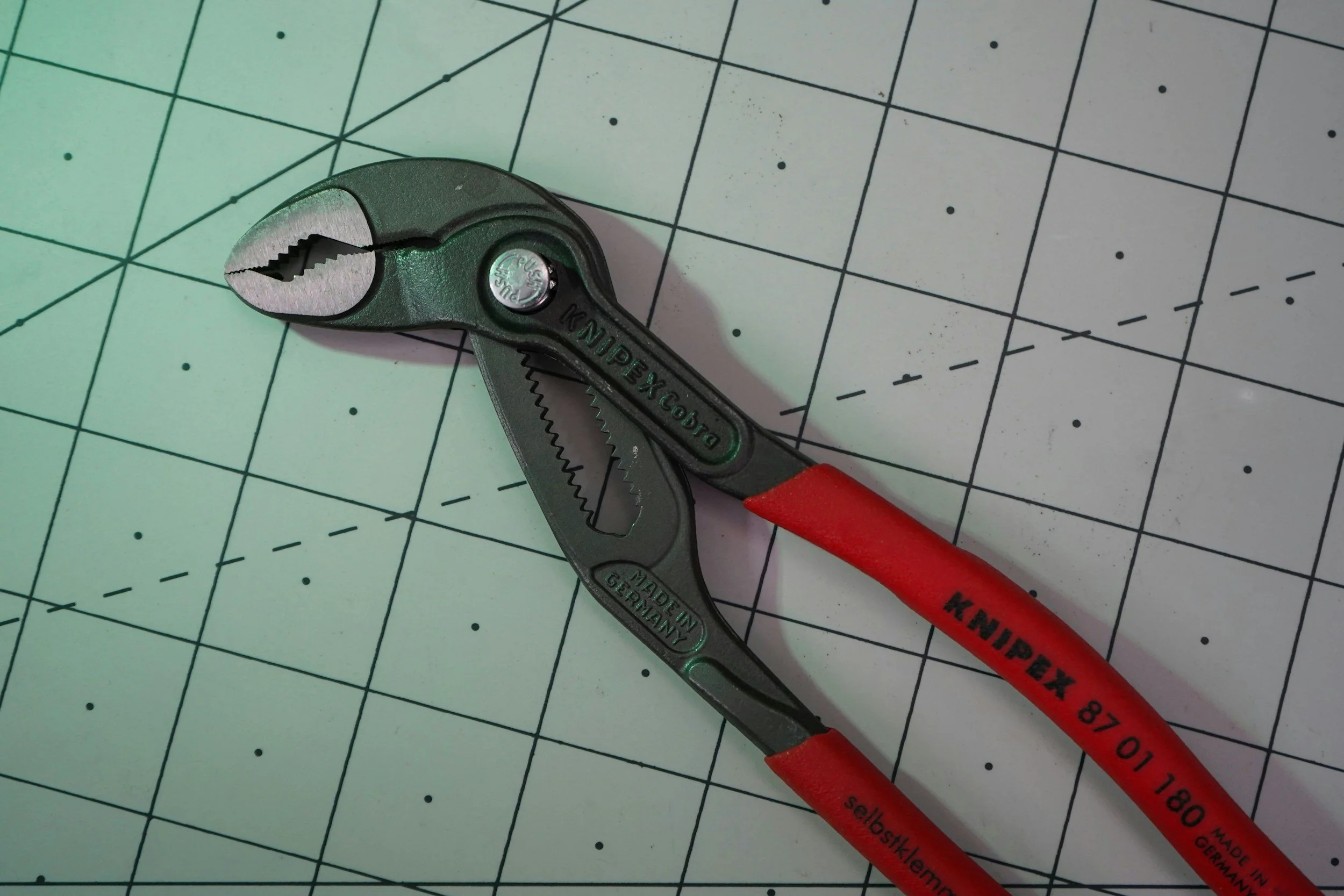
Today, we’ll explore the investment casting process through the lens of creating pliers.
The Casting Process - Our Example Part
Investment casting is a service that can benefit hundreds of industries, from aerospace to oil & gas, and many, many more. But, to best explain the investment casting process, it helps to use an example part that everyone is familiar with, pliers.
In this blog, we'll walk through the casting process through the lens of creating a pair of stainless steel pliers. Along the way, we'll touch on each step of the process, hopefully leaving you with a clearer understanding of what goes into manufacturing your parts through investment casting.
Investment Casting Services Step 1:
Creating A Wax Pattern
Investment casting traditionally uses wax models (known as patterns) to help foundry workers pour accurate metal parts. These wax patterns are 1:1 replicas of soon-to-be metal components and are easy to replicate, allowing production teams to cast your part hundreds or even thousands of times.
To create these wax patterns, foundries often create something called a tooling, which allows them to replicate the patterns consistently. You can think of tooling much like an ice cube tray. With an ice cube tray, you can make ice cubes of the exact same shape and size, essentially without limit. But instead of just a cube, tooling takes the exact shape of your part (in our case, pliers) and allows us to make all of the patterns we need for a full production run.
Bonus note:
Beyond traditional tooling, foundries can also use 3D printing to expedite the process or bypass the need for tooling. This is a great option for one-offs, small orders, legacy part reproduction, or rush orders.
Step 2: Wax Injection & Tree Assembly:
For our hypothetical pliers, we need to produce 5,000 units, which means we need at least 5,000 wax patterns to match our demand. Investment casting really shines as a method for producing metal parts in bulk, and our tooling enables us to seamlessly produce as many as needed.
Bulk production is what drives a really cool part of this step in production, tree formation. Foundry workers will take our wax pliers and assemble them into what is known as a "tree." Trees allow us to pour multiple pliers in one go (as opposed to pouring each part individually). This saves the customer in material costs as well as dramatically reducing turnaround/production times.
How does it work? By connecting multiple parts to a central channel or "sprue," foundry workers can pour molten metal into this channel, and it will disperse into each individual part. Check out a few example trees in the gallery below!
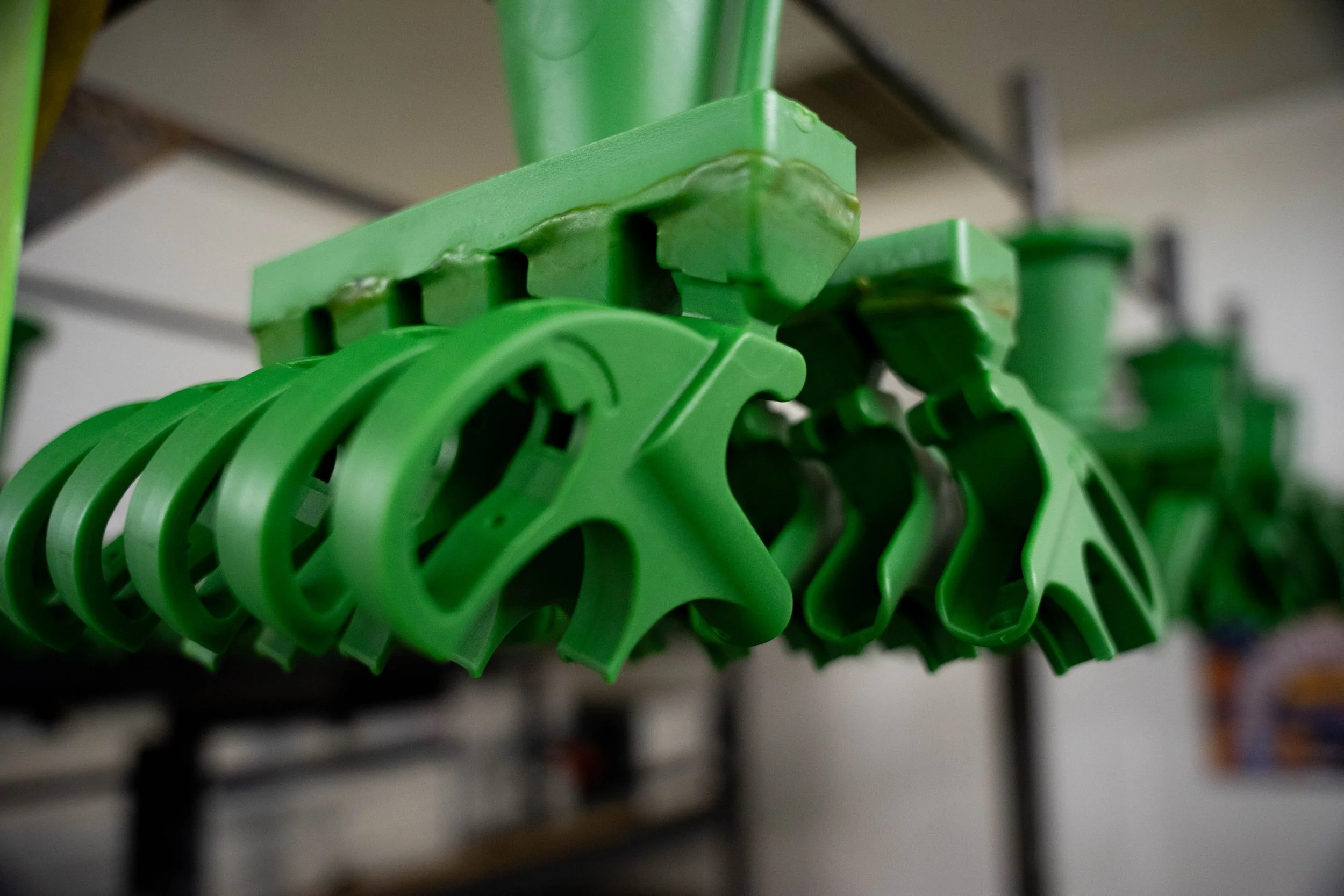
Several defense industry parts on a tree assembly.
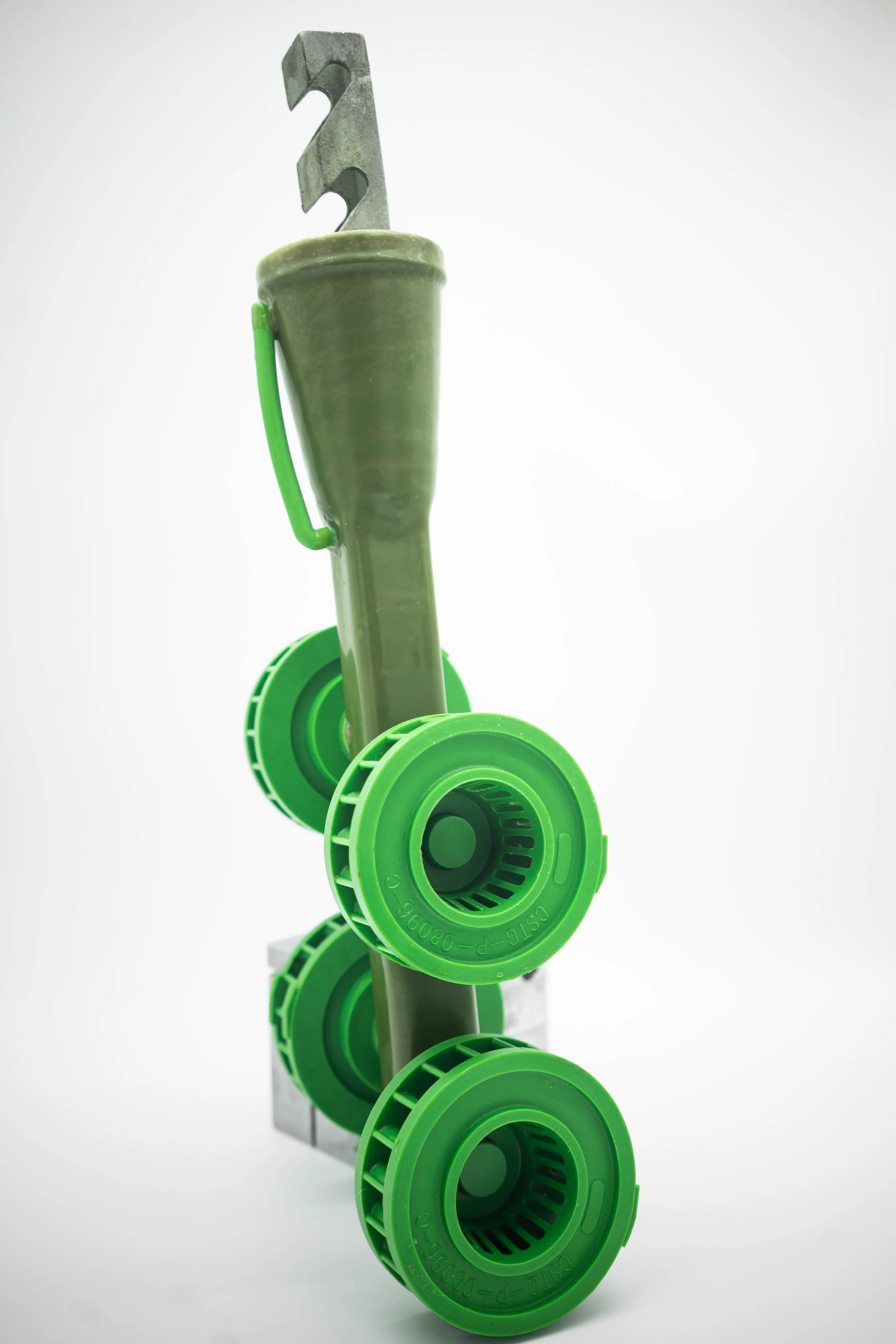
A full wax tree assembly. Sprue (seen in dark green) patterns (seen in light green)
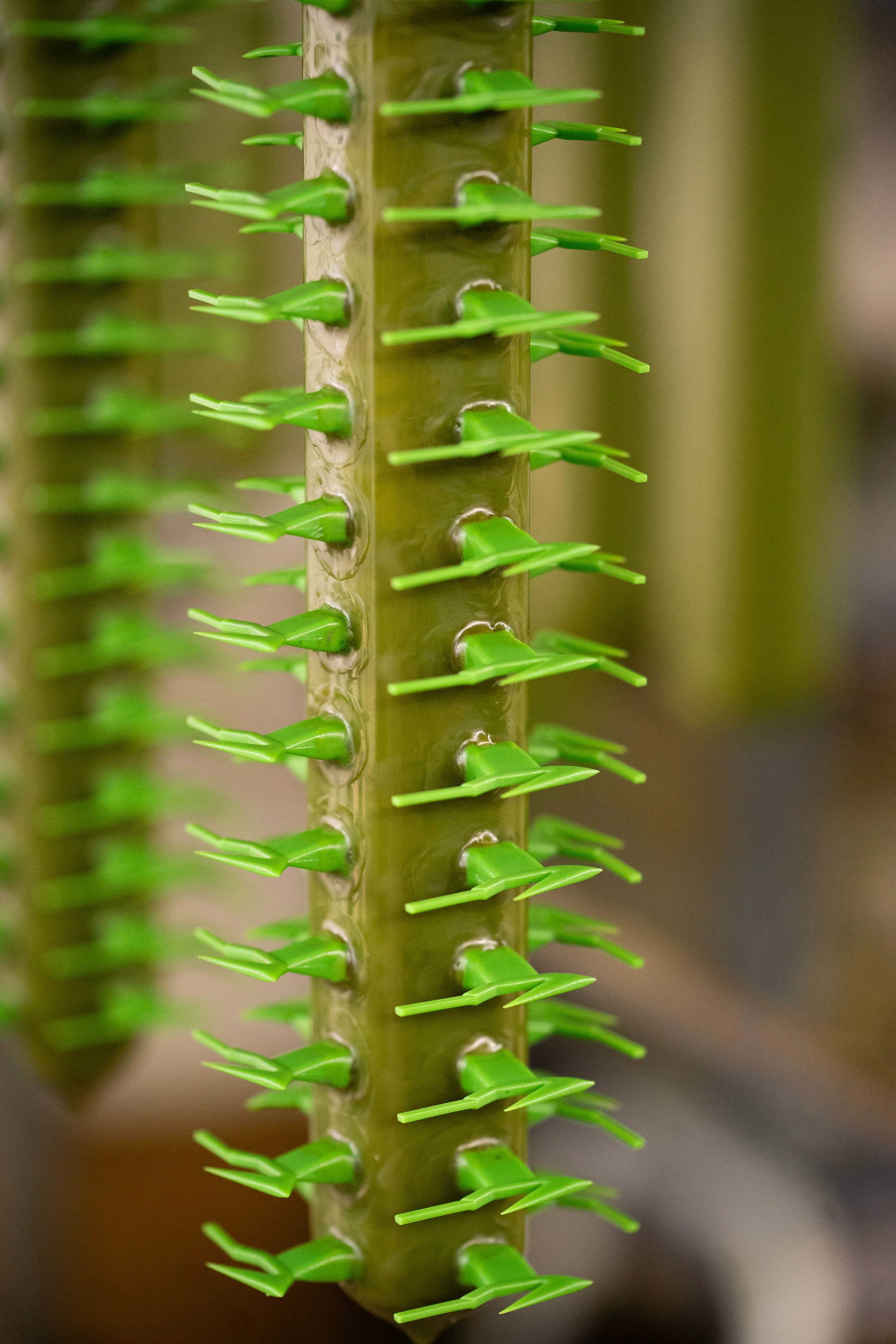
Many small patterns attached to a tree.
Investment Casting Services Step 3: Forming a Ceramic Shell
At this point, you may be thinking, "won't wax just melt and make a huge mess with molten metal?" And you'd be bang on. We'll get to what happens to all the wax patterns soon, but we still need them for a bit!
In this step, foundry workers dip wax patterns and their trees into a ceramic slurry multiple times to form a hard outer shell around the parts. The ceramic shell formed through multiple dipping and drying cycles will form the medium for metal pouring and won't melt away like wax would during the pouring stage.
During this step in production, foundry workers will carefully monitor shell thickness and shape to ensure it will be strong enough for subsequent metal pouring, while maintaining the precision that our pliers require.
Step 4: Wax Burnout and Reclamation
Once our shells have solidified, foundry workers will prepare them for dewaxing. In this step, the wax patterns and their newly formed shells are placed in a flashfire oven or autoclave, and the wax is melted away. This leaves behind a strong, hollow ceramic shell, perfectly prepped for the molten metal.
Earlier in this article, we related tooling to an ice cube tray, and in this step, we can use that comparison again. The wax patterns and their trees allowed us to make a highly precise ceramic mold for metal pouring, which, in the next step, will allow us to cast near-net-shape parts.
Bonus Note: Cost Savings and Sustainability
One advantage of investment casting services is the ability to reclaim and recycle nearly 99% of the wax. Instead of becoming waste, the melted wax is collected, filtered, and recycled or reprocessed for use in future projects.
This high reclamation rate significantly reduces material costs and minimizes the environmental footprint of the foundry, making it one of the most sustainable metal-forming methods available today.

An ice cube tray is a helpful way to think of how tooling and ceramic shells work in the investment casting process.
Investment Casting Services Step 5: Metal Pouring
Our example pliers are finally ready to be poured! Just before metal pouring, the now hollow ceramic shells are placed in an industrial furnace and superheated. We do this because the thermal shock of introducing molten metal to a room-temperature shell would shatter them and lead to part failures.
Once the shells are heated, foundry workers will pour the metal alloy of your choice (in our example, 17-4 stainless steel) down the sprue of our tree, and it will flow into each part’s cavity. Air pockets and impurities are forced up and out of the sprue, leaving behind exceptionally accurate cast pliers.
After pouring, the metal will cool and solidify, and the shells will sluff away or be removed by the production team.
Step 6: Finishing Work
Investment casting allows for extremely precise parts that are at or near net shape upon completion of pouring, but there is always at least a little finishing work to do! Finishing work includes anything additional your part requires before it goes to market. For example, testing, sanding, welding, painting, machining, plating, and beyond.
We'll use our plier example to showcase a few more examples:
Grinding: Our pliers were part of a tree; foundry workers will need to cut/grind each part away from the larger assembly.
Non-Destructive Testing: We want to ensure that everything went perfectly during metal pouring, so we will select a sample of parts to undergo NDT to ensure there is no porosity or weak points in our pliers.
Heat Treating: Our pliers need to be super strong and hold up for years.
Rubber Handles: We want to add our custom rubber grips to the casting pliers to get them ready for market.
Conclusion:
This has been a whirlwind summary of investment casting! We hope this helps you feel a bit more comfortable and informed about the entire process. If you are looking for investment casting services or have a question for our team, contact us today.
IPC Foundry Group has over 45 years of investment casting expertise and served customers in 131 unique industries last year. We'd love to help save you time, money, and headaches on your next production cycle!